When lockdown was declared in March 2020, my wife Liz and I decided that we would walk regularly, not only for exercise, but also to pursue a personal project. Maps made of Wales in 1888 are now available online. We wanted to explore all the footpaths around where we live in Conwy and compare them with those which were recorded 132 years ago.
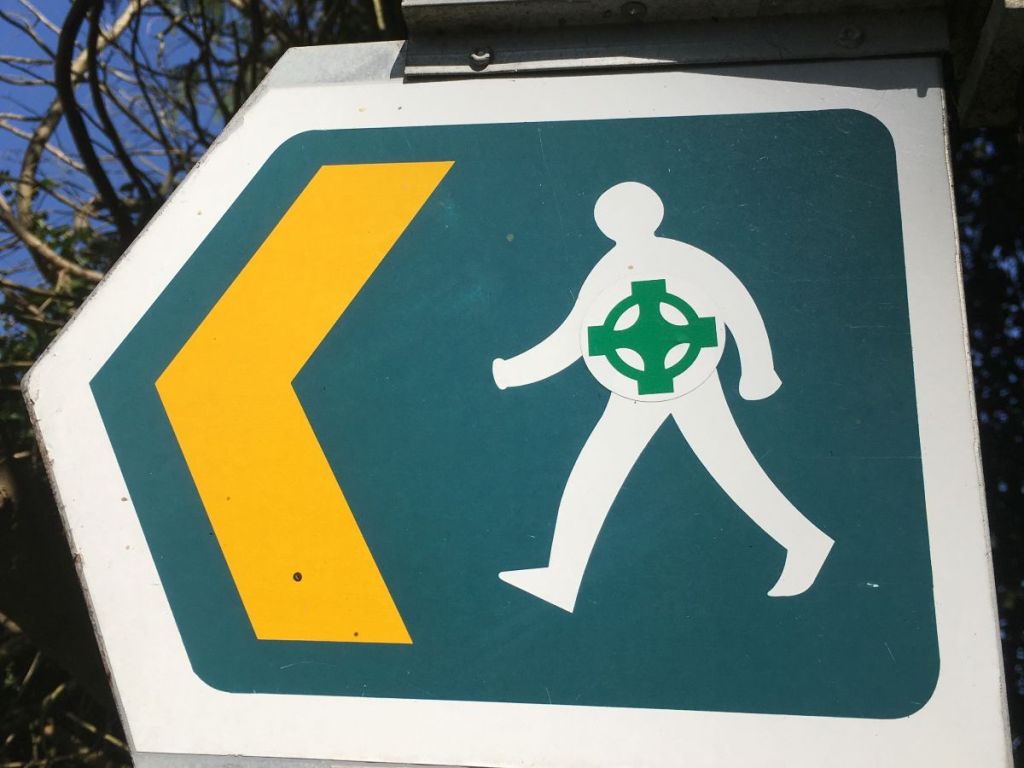
At first it was easy: Conwy Mountain and Benarth are visible from our house, so we had plenty to choose from. However, as lockdown continued we found ourselves going further afield and becoming ever more reliant on the old map. Unfortunately that led to problems. Conditions on the ground now don’t always correspond to 1888. Waymarkers and signposts would suddenly vanish, leaving us puzzled, frustrated and not sure of the right way. We needed a plan, otherwise we would be forever retracing our steps. In the end that plan was simple. We assumed that there must have been a clear path in the past and therefore if we kept going forward, signs and markers would reappear. Where they didn’t, we would go to the other end and work backwards (or turn it into a circular walk). It usually overcame the problem. Of course, our ancestors first walked across the Welsh landscape long before the cartographers did in 1888. Some of these routes go back thousands of years. Liz and I discovered that the same paths are still there today, though often hidden and overgrown from lack of use.
Which brings me to the two quotations from the prophet Jeremiah. ‘Ancient paths’ were symbolic of the unique covenant relationship, set up at Sinai, that would provide a distinctive ethical and spiritual character for the people of God. The ‘way-markers’ and ‘signposts’ reflected their role as a light to the nations and a model for ethical and religious behaviour for those who had gone astray. Jeremiah was reminding the people firstly that they were a distinctive nation with different expectations and lifestyle to their neighbours, and secondly that even though they had gone astray they were still called to be beacons or ‘signposts’ – inviting everyone else in the world to ‘walk in the ways of the Lord.’ There is an unexpected, counter-intuitive character to this relationship with God. I remember years ago I was in a Bible study looking at the Ten Commandments. The question was asked, “What do you think is the most important thing about these commandments?” to which I answered, “They come in the twentieth chapter of Exodus.” When you read prior verses in chapters 1-19, the Commandments are seen in a different light. It isn’t really a matter of “do this and Live!” it is rather, God saying, “Look at all I have already done for you, now I want you to be my people and live by my standards and benefit from my care and provision.” This commission is still ours today, reconstituted, as it is, in the life, death and resurrection of Jesus. Let us share with others the ‘ancient paths’ and show them the way-markers and signposts by which we follow God. If we keep going forward, the signs and markers we all need will reappear. In these difficult days there is a future and hope.
(Reflection written by Paul Clough)
 caruconwy.com